



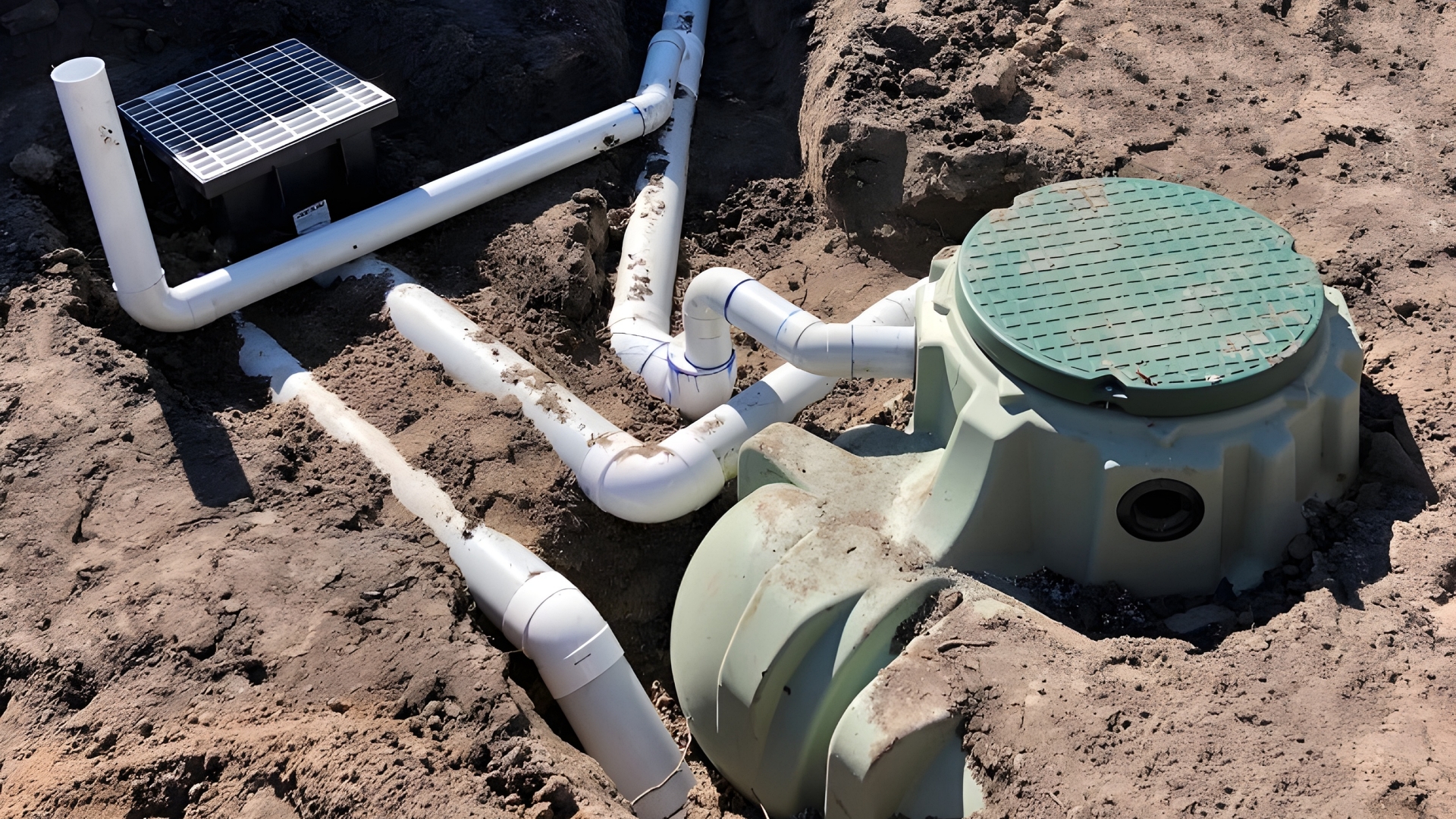
[PHOTOS] Hidden infrastructure that prevents future failures, delays, and defects in any home construction, and determines whether the house drains properly for decades.
A well‑designed drainage and sewer connection probably isn’t the part of a project anyone celebrates, but it’s the part that protects everything built above it. Before the slab goes down, before the framing starts, the most important work is already happening underground. This is where correct levels, compliant connections, and long‑term water management are set in place — and where mistakes become expensive.
A sewerage system isn’t glamorous — but the quality of your life depends on it.
This page at a glance.
- Sewer connection project summary:
- What happens when a sewerage system fails?
- What are the most common sewerage system failures?
- What really needs to happen underground before the slab is poured?
- [VIDEO] Stuff nobody thinks about until it fails.
- The result of a precise and expert sewerage system install.
- Three subtle signs that suggest the plumber is experienced
Sewer connection project summary:
▸ Critical underground work completed before the slab — sewer connections, stormwater systems, pump wells, and pre‑slab drainage all installed, tested, and ready for inspection.
▸ Designed to prevent long‑term failures — correct levels, compliant connections, and site drainage set to ensure proper fall, flow, and performance for decades.
▸ Built for Queensland conditions — installation planned to withstand heavy rain, high water tables, soil movement, and storm‑driven infiltration common across SEQ.
▸ Reduces risk of costly defects — prevents slab heave, erosion, backflow, odours, mould, and expensive excavation after the home is finished.
▸ Clean, organised, builder‑friendly worksite — tidy trenches, smooth sequencing, and professional presentation that keeps the project moving without delays.
▸ Installed to code and ready for inspection — compliant, documented, and completed to a standard that protects the entire build above it.
What happens when a sewerage system fails?
A sewer failure isn’t just an inconvenience. It affects the structure, the site, the health of the occupants, and the cost of the build or repair.
Structural and site damage.
✗ Soil saturation around the foundations — can lead to slab heave, movement, cracking, and long‑term instability.
✗ Erosion and undermining — water washes away supporting soil, creating voids under slabs, driveways, and paths.
✗ Backflow into the home — sewage can enter bathrooms, laundries, and floor wastes.
Health and hygiene risks.
✗ Exposure to raw sewage — bacteria, viruses, and pathogens create genuine health hazards.
✗ Mould growth — moisture trapped in walls or under floors becomes a long-term indoor air quality issue.
✗ Contaminated soil — unsafe for children, pets, and landscaping.
Operational and lifestyle impacts.
✗ Loss of bathroom and kitchen function — toilets, showers, sinks become unusable.
✗ Odours inside and outside the home — persistent and difficult to eliminate.
✗ Blocked or slow drains — everyday living becomes frustrating or impossible.
Financial and project consequences.
✗ Costly excavation and repair — often far more expensive once the home is finished.
✗ Damage to finished surfaces — flooring, cabinetry, plasterboard, and paint may need replacing.
✗ Insurance complications — some failures aren’t covered if caused by poor installation.
✗ Project delays — for builders, a failed inspection or collapsed line can halt the entire schedule.
Environmental impact.
✗ Contamination of stormwater systems — sewage entering natural waterways.
✗ Soil contamination — requiring remediation or disposal of affected soil.
A sewer failure is almost always hidden, expensive, and disruptive.
What are the most common sewerage system failures?
According to Queensland Urban Utilities, Unitywater, and the Sunshine Coast Council, the failures that hit hardest in Queensland tend to fall into a few very predictable categories — the climate, soil conditions, and storm patterns here make certain problems far more common than in other parts of Australia.
🌧️ Climate‑Driven Failures (Very Common in QLD).
Failures tied to dramatic weather events many people have lived through. Queensland’s heavy rain, sudden storms, and high water tables create failure patterns that show up again and again.
■ Wet‑weather sewer overflows.
When stormwater enters the sewer network, it overloads the system and causes sewage to back up into homes or yards.
■ Stormwater infiltration into sewer lines.
Cracked pipes, poor joints, or old clay lines let stormwater rush in during rain events, overwhelming the system and causing overflows.
■ Soil movement affecting pipes.
Expansive soils and erosion around foundations can shift pipework, causing cracks, sags, or full collapses — especially after prolonged wet periods.
🌱 Environmental & Site‑Related Failures.
Failures that affect lifestyle, comfort, and neighbour relationships. These are extremely common across SEQ, especially on sloping blocks, older suburbs, and acreage properties.
■ Tree root intrusion.
Roots entering and growing inside pipes is one of the top causes of blockages and overflows in Queensland.
■ Overflowing land application areas (for on‑site systems).
On rural or semi‑rural blocks, trenches or irrigation areas can overflow, sending wastewater onto neighbouring properties.
■ Odours from failing systems.
Rotten‑egg smells (hydrogen sulphide) are a major complaint and a clear sign of system failure.
🚽 Household Behaviour Failures.
These are the failures people hate because they feel preventable — and they often trigger strong emotions — outrage, humour, and “I can’t believe people do that” reactions.
■ Wet wipes and hygiene products causing blockages.
Councils repeatedly warn that wipes, paper towel, and sanitary items cause expensive blockages.
■ Fat, oil, and grease solidifying in pipes.
Fats washed down the sink harden and trap other debris, leading to “fatbergs” and sewer overflows.
■ Clothing or foreign objects flushed.
Nappies, underwear, and other items cause catastrophic blockages.
🏠 Health & Home Impact Failures (high emotional response).
These are the ones that hit people personally — and you can imagine it happening to your home.
■ Backflow into the home.
Sewage coming up through floor wastes or toilets is one of the most distressing failures.
■ Mould growth from hidden leaks or overflows.
Moisture trapped in walls or under floors leads to mould — a major topic in Australian media right now.
■ Persistent sewer odours.
Smells inside the home are a strong emotional trigger because they affect daily life and comfort.
What really needs to happen underground before the slab is poured?
✓ Sewer connections and mainline tie‑ins installed to council and authority requirements.
✓ Stormwater systems, including pits, retention tanks, pump wells, and overflows.
✓ Pump systems positioned and installed for low‑lying or difficult sites.
✓ Site drainage planned and set to level to ensure correct fall, flow, and long‑term performance.
✓ Pre‑slab drainage completed, tested, and ready for inspection.
✓ Clean, organised, builder‑friendly work areas that keep sequencing smooth and predictable.
Once the concrete slab goes down, these pipes are permanently buried. That’s why this stage is done extremely carefully — because there’s zero chance of an easy fix later.
[VIDEO] Stuff nobody thinks about until it fails.
Standards that guided this installation:
✓ Compliance without complications — everything installed to code, documented, and ready for inspection.
✓ Reliable sequencing — work completed on time so the next trade can step straight in.
✓ Risk reduction — preventing water issues, erosion, and costly rework.
✓ Professional presentation — tidy trenches, clean pipework, and workmanship that reflects well on any project.
Precision underground prevents problems above it.
The result of a precise and expert sewerage system install.
A site that drains properly, a sewer system that performs reliably, and underground infrastructure that supports the entire build for decades. It’s not glamorous work — but it’s the foundation of a trouble‑free project.
This kind of sewer and drainage setup is common:
◆ For new builds needing stormwater detention.
◆ For properties requiring pump-out systems due to low fall.
◆ For commercial sites managing large roof or hardstand runoff.
◆ For upgrades to old drainage systems.
For builders and developers who require:
◆ “Stormwater compliance Sunshine Coast”
◆ “Drainage for new builds”
◆ “Sewer connection for new home”
◆ “Site drainage solutions”
◆ “Pump well installation”
◆ “Low‑lying block drainage”
◆ “Retention tank requirements QLD”
◆ “Civil plumbing contractors Sunshine Coast”
We handle the responsibility, protect the site, and keep the build moving forward.
Three subtle signs that suggest the plumber is experienced
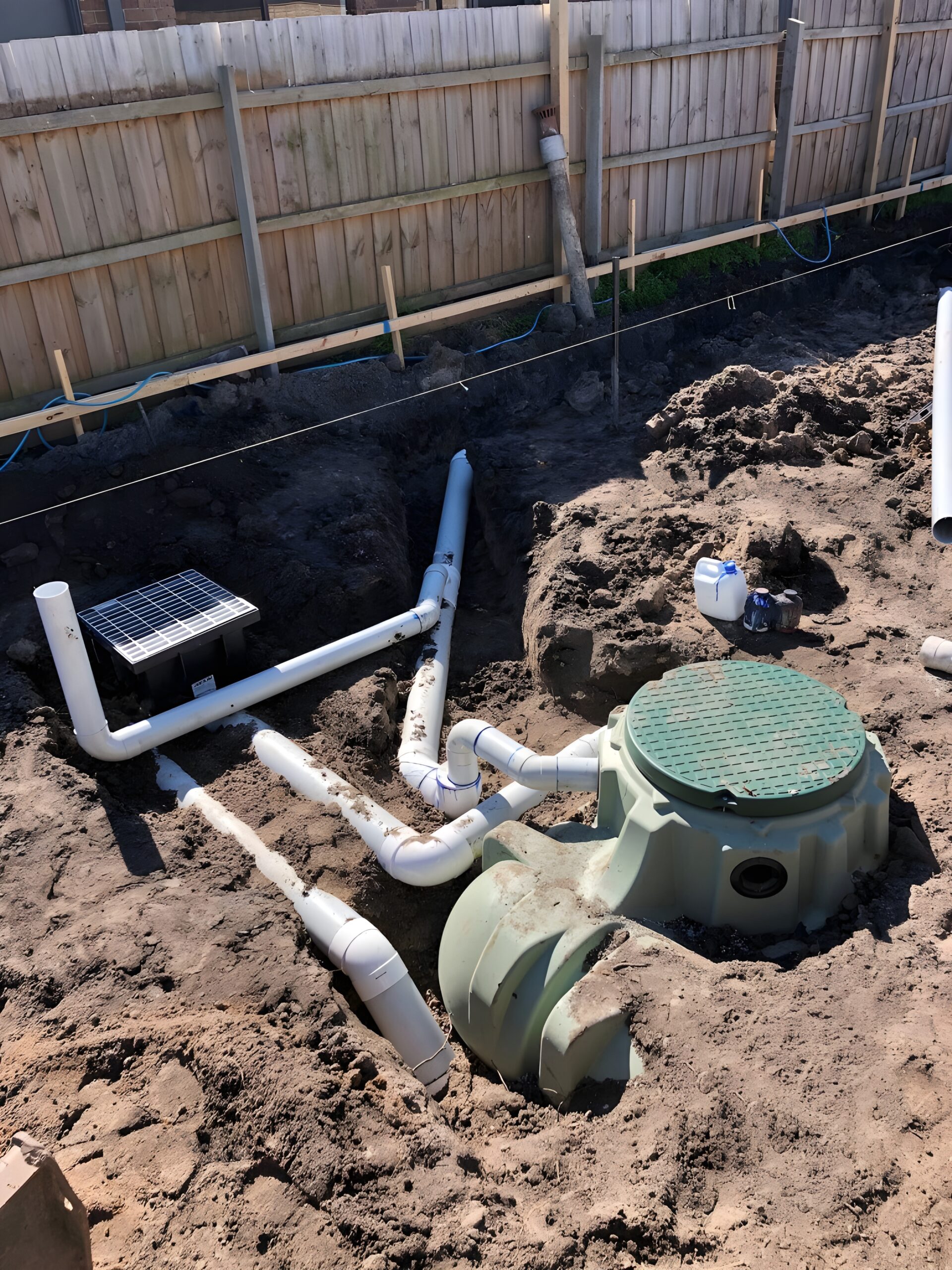
1. Consistent pipe fall (gradient). The pipes run in smooth, steady lines rather than short uneven sections. The string lines above the trench indicate the plumber is controlling the grade carefully, which is critical for gravity sewer flow. Poor work often shows inconsistent fall or pipes sitting unevenly in the trench.
2. Use of long sweeps instead of tight turns. Most of the changes in direction use two 45° bends or sweeping fittings rather than sharp 90° turns. This reduces blockage risk and improves flow. Rushed installs often rely on hard 90° bends because they are quicker.
3. Logical junction layout. The branches merge progressively into a main line rather than multiple fittings stacked tightly together. This suggests the plumber planned the fixture layout and pipe routing in advance, minimizing turbulence and future maintenance problems.
The photo below shows underground drainage installation during early construction. The plumber is setting up the sewer and stormwater infrastructure before the house is built, navigating around planned slab footings and room layouts. The rough-in stage before backfilling is where pipes are installed, connections made, inspection points set, then waiting for inspection before proceeding.



1 Comment
Leave your reply.