


[VIDEO] What makes this project compelling is how much invisible coordination, sequencing, and risk‑management sits behind what looks like “just a roof.” Let’s talk about how the project functioned and why it would matter to developers, asset owners, or commercial builders.
For developers and premium commercial clients.
Every industrial building relies on its roof long before the first tenant walks through the door. What you see in this project is the kind of disciplined, large‑scale coordination that turns a steel skeleton into a high‑performing commercial asset.
From the first truss lift to the final sheet, the team worked through a tightly sequenced program: structural steel set out with millimetre accuracy, materials craned and staged exactly where the load could be carried, and temporary bracing installed to stabilise long spans before the roof locked everything into place. These are the moments the public never sees—but they’re the moments that determine whether a building performs for decades.
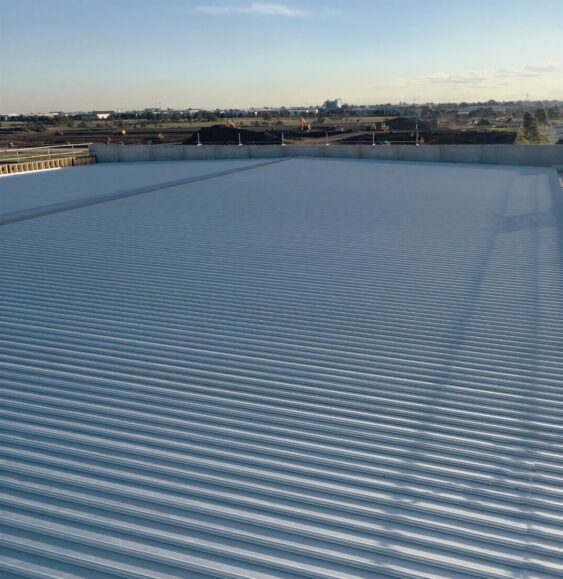
The finished roof tells the story: clean lines, consistent fall, and a flawless sheet layout that only happens when the underlying structure is installed with absolute precision. For developers, this level of craftsmanship isn’t cosmetic—it’s a safeguard against leaks, heat loss, operational downtime, and costly future maintenance.
In projects of this scale, the roof isn’t just a component. It’s a commitment to longevity, safety, and the long‑term value of the asset. And it’s the kind of work that separates a competent contractor from a trusted partner.
What the project is about.
A multi‑stage industrial roofing installation involving:
◆ Structural steel erection — primary and secondary beams, trusses, and cross‑bracing.
◆ On‑roof logistics — materials staged safely on the deck, likely craned in batches.
◆ Sheeting and insulation installation — the transition from open frame to weather‑tight envelope.
◆ Live‑site coordination — workers operating at height with strict sequencing to avoid delays or rework.
This is the kind of project typical of warehouses, logistics hubs, manufacturing facilities, or large commercial sheds.
How the project functioned behind the scenes.
These photos show a workflow that’s far more complex than the public ever sees:
■ Precision sequencing — Steel installers, roofers, and crane operators must work in a tight choreography. If one trade slips by a day, the entire program can stall.
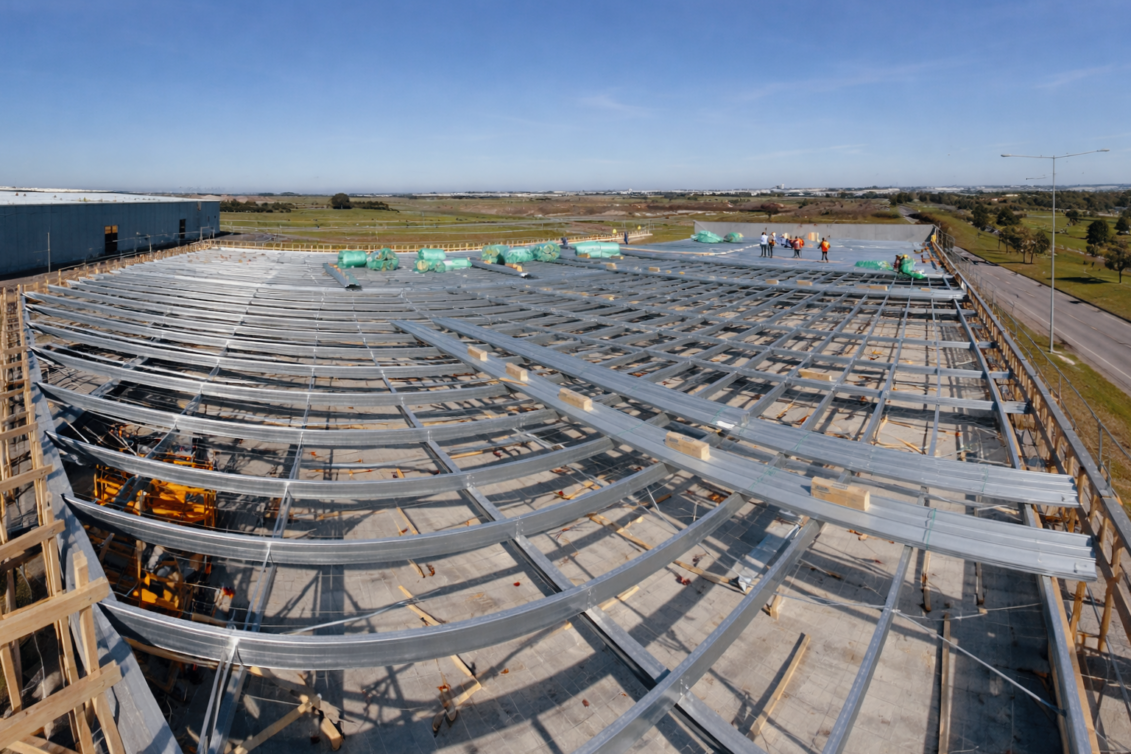
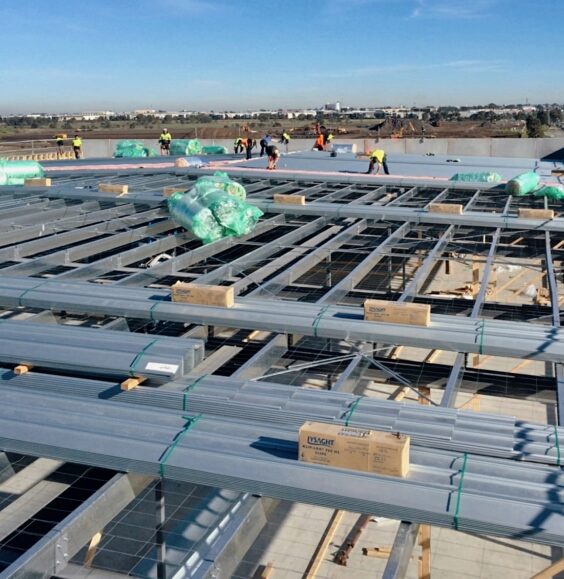
■ Load management on the roof — The green‑wrapped bundles and metal sheets aren’t placed randomly. Engineers calculate where materials can safely sit without overloading partially completed sections.
■ Weather‑risk mitigation — Industrial roofs are built in long spans. A single unexpected storm can damage insulation, warp sheets, or flood the interior. The team clearly worked in controlled stages to keep the structure protected.
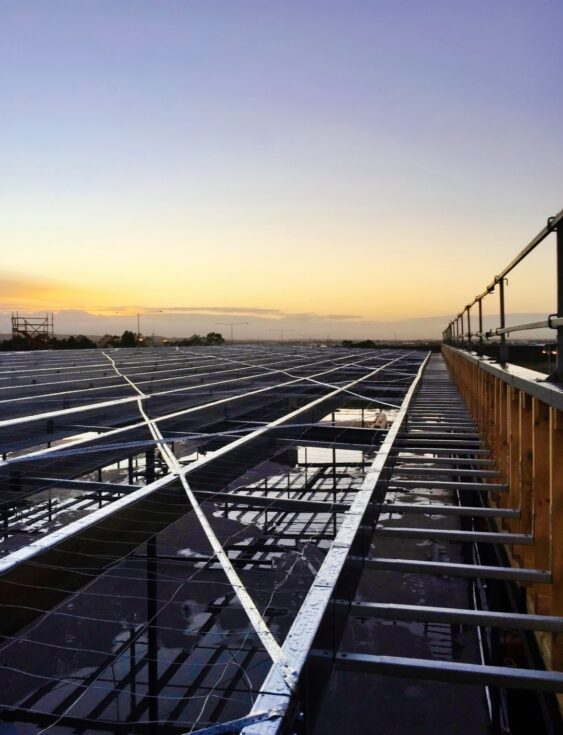
■ Temporary bracing and safety systems — Before the roof becomes rigid, the steel skeleton is vulnerable to wind loads. The cross‑bracing visible in your images is part of a temporary stability strategy that most people never realise is essential.
■ Tolerance management — Long‑span steel can move millimetres to centimetres depending on temperature. Getting the final sheets to align cleanly requires constant adjustment and craftsmanship.
What makes this roof installation unique.
A few details stand out that elevate this beyond a “standard” industrial roof:
◆ The scale and openness of the structure — Long spans with minimal internal supports suggest a premium build designed for high‑value operational flexibility (warehousing, machinery, or logistics).
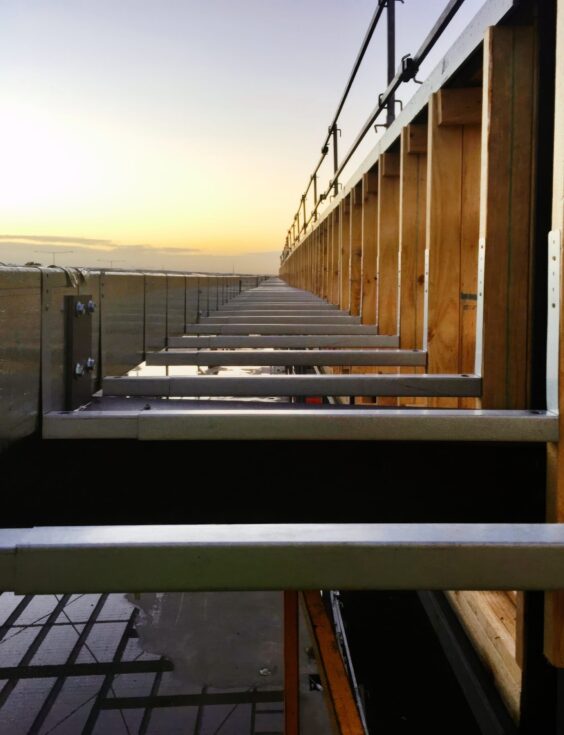
◆ The quality of the steelwork alignment — The beams in your close‑up image are exceptionally straight and evenly spaced, which speaks to a highly disciplined install team.
◆ The sunset shot — It shows the structure mid‑transition, with bracing and purlins installed but before sheeting. This is the moment where the entire project is most vulnerable and most dependent on expert timing.
◆ The finished section — The completed corrugated roof is clean, uniform, and free of visible ripples or misalignment—something only achieved when the underlying steel is installed perfectly.
What the general public rarely knows (but developers appreciate).
These are the kinds of insights that our clients find reassuring:
■ Industrial roofing is one of the highest‑risk phases of a commercial build. Not because it’s dangerous (though it is), but because mistakes here can cost hundreds of thousands in operational downtime later.
■ A roof like this is a structural system, not a “cover.” It affects fire safety, thermal performance, acoustics, and long‑term maintenance costs.
■ The craftsmanship is in the unseen details. Straight lines, correct fall, tight fixings, and perfect sheet alignment determine whether the building leaks in year one or lasts 40 years.
■ The team’s coordination is the real differentiator. Anyone can install sheets; very few can deliver a roof this large without delays, defects, or safety incidents.
■ Developers often judge a contractor by their roof. It’s one of the clearest indicators of discipline, planning, and respect for the client’s asset.
[PHOTOS] 1. Close‑Up of Beam Alignment: A detailed side perspective showing the accuracy of the steelwork. Each beam is evenly spaced, perfectly parallel, and tied into the timber frame below. It highlights the craftsmanship and tolerance control that determines how well the final roof will perform.
2. Structural Frame at Sunset: A broader, atmospheric shot of the steel skeleton against a sunset sky. Cross‑bracing and long spans are fully visible, capturing the moment before the roof becomes rigid. It’s the most vulnerable stage of the build—and the one that showcases the engineering behind the scenes.
3. Full Roof Structure in Progress: A wide, elevated view of the roof during its most complex phase, with long‑span steel trusses, purlins, and insulation bundles staged across the deck. The scale of the structure is obvious here—open, exposed, and relying on precise sequencing between crane lifts, steel installers, and roofers working at height.
4. Active Installation Phase: Workers are installing insulation and metal sheeting across the open deck, with materials organised in safe load zones. This image shows the choreography of the build: trades moving in sequence, managing weather windows, and locking the structure into place.
5. Completed Roof Section: A clean, finished run of corrugated metal sheeting with crisp lines and uniform fall. This is the payoff image—the transformation from exposed steel to a sealed, high‑performance industrial roof built to last.