


[VIDEO] What’s Involved in Plumbing a Multi-Townhouse Development.
Installing gas mains for a townhouse project isn’t just about laying yellow pipe in the ground. It’s a coordinated process that requires careful planning, compliance with strict safety standards, and precise execution from start to finish. On a project like this 22-townhouse development, the gas main becomes shared infrastructure. If it’s done right, no one needs to think about it. If it’s done poorly, everyone does.
1. Planning, Design & Approvals
Before a single trench is dug, the gas layout is engineered to suit the site. This includes pipe sizing, pressure requirements, meter locations, and future access for maintenance. The design must align with Australian Standards and local authority requirements, and approvals are obtained before work begins.
Good plumbing work starts on paper. Fixing mistakes underground is expensive.
2. Trenching & Ground Preparation
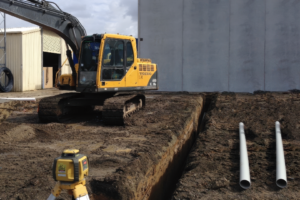
Trenches are excavated to precise depths and clearances, often coordinated with other underground services like stormwater, sewer, electrical, and communications. The ground must be stable and correctly bedded to protect the pipework over its lifespan.
This stage is where experience matters most. Gas mains don’t tolerate shortcuts.
3. Installation of Gas Mains
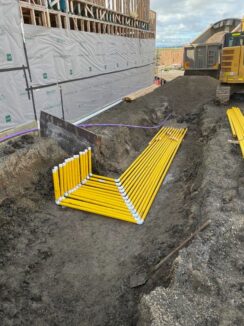
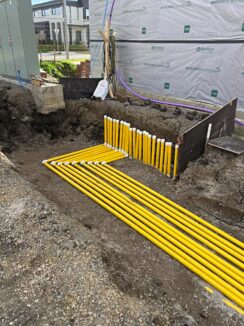
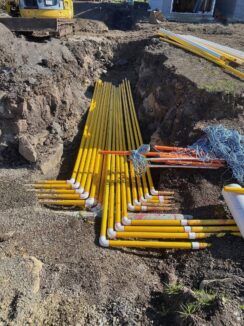
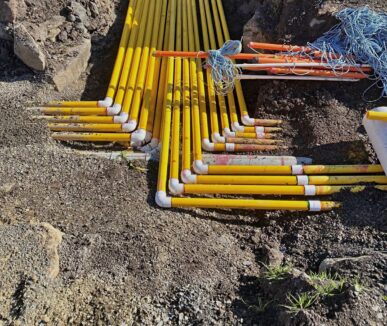
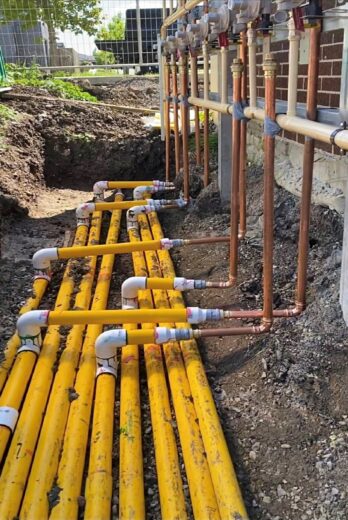
The yellow gas piping is laid, joined, and secured according to specification. Each joint is critical. Alignment, spacing, and protection are all checked as the line progresses through the site. Once installed, the mains are pressure tested to confirm there are no leaks before being approved for connection.
Gas is unforgiving. The system either passes perfectly — or it doesn’t pass at all.
4. Meter Banks & Individual Connections
For townhouse developments, gas meters are typically grouped neatly along boundary walls or in designated service zones. Each dwelling receives its own meter, isolation valve, and regulated supply, allowing independent usage and billing.
Installation becomes visible — and where a clean, professional finish matters.
5. Compliance, Testing & Commissioning
Before gas can flow, the entire system is inspected, tested, certified, and commissioned. Only after meeting all safety and regulatory requirements is the supply activated.
The best compliment is silence. No smells. No issues. No callbacks.
What’s Most Important
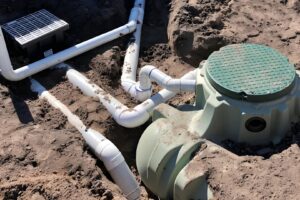
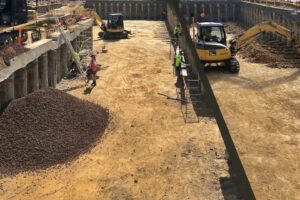
A properly installed gas main is invisible infrastructure. It supports cooking, hot water, and heating reliably for decades, without drama. Achieving that reliability takes planning, coordination, and skilled trades who understand that gas work is never “just another service.” You don’t see good plumbing work. You just trust it. [PHOTOS] The pictures below show the groundworks, a lot of yellow pipes, landscaping covering over the pipes, and connection to meters during the install.